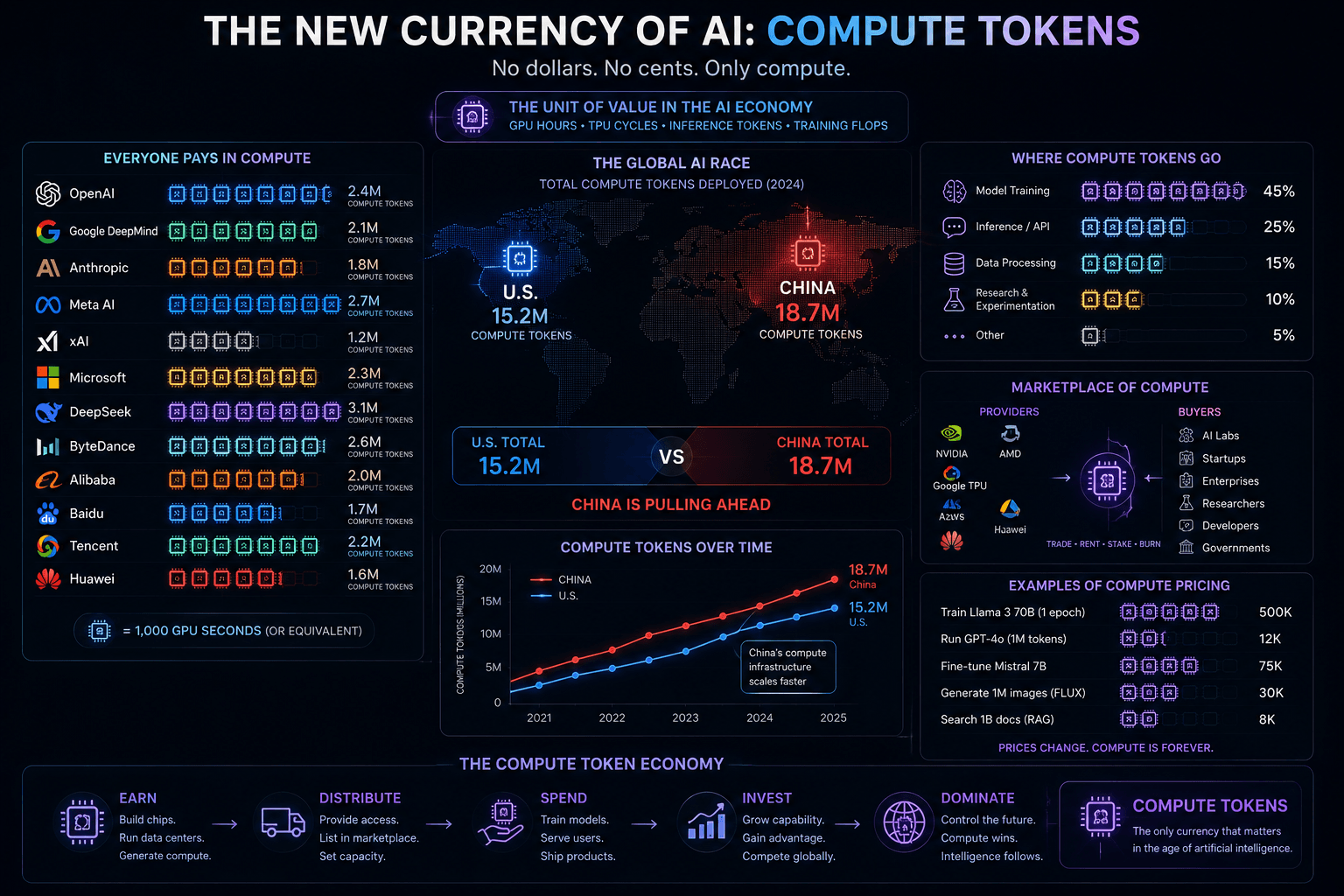
The Frontier AI Models in 2026
JM
Every AI company calls its newest release "frontier." It's become marketing wallpaper, the AI equivalent of a mattress store's "Everything Must Go" banner that never comes down. So let's actually define the term before breaking down who's earned it.
A frontier model is a model operating at or near the current ceiling of general capability: reasoning, coding, tool use, multimodal understanding, and long-horizon agentic work, all in one system, trained at a scale few labs can afford. It's not about being the newest. It's about being competitive on the hardest evals the field has right now, not the ones from six months ago. Plenty of models ship every month; only a handful actually move the ceiling.
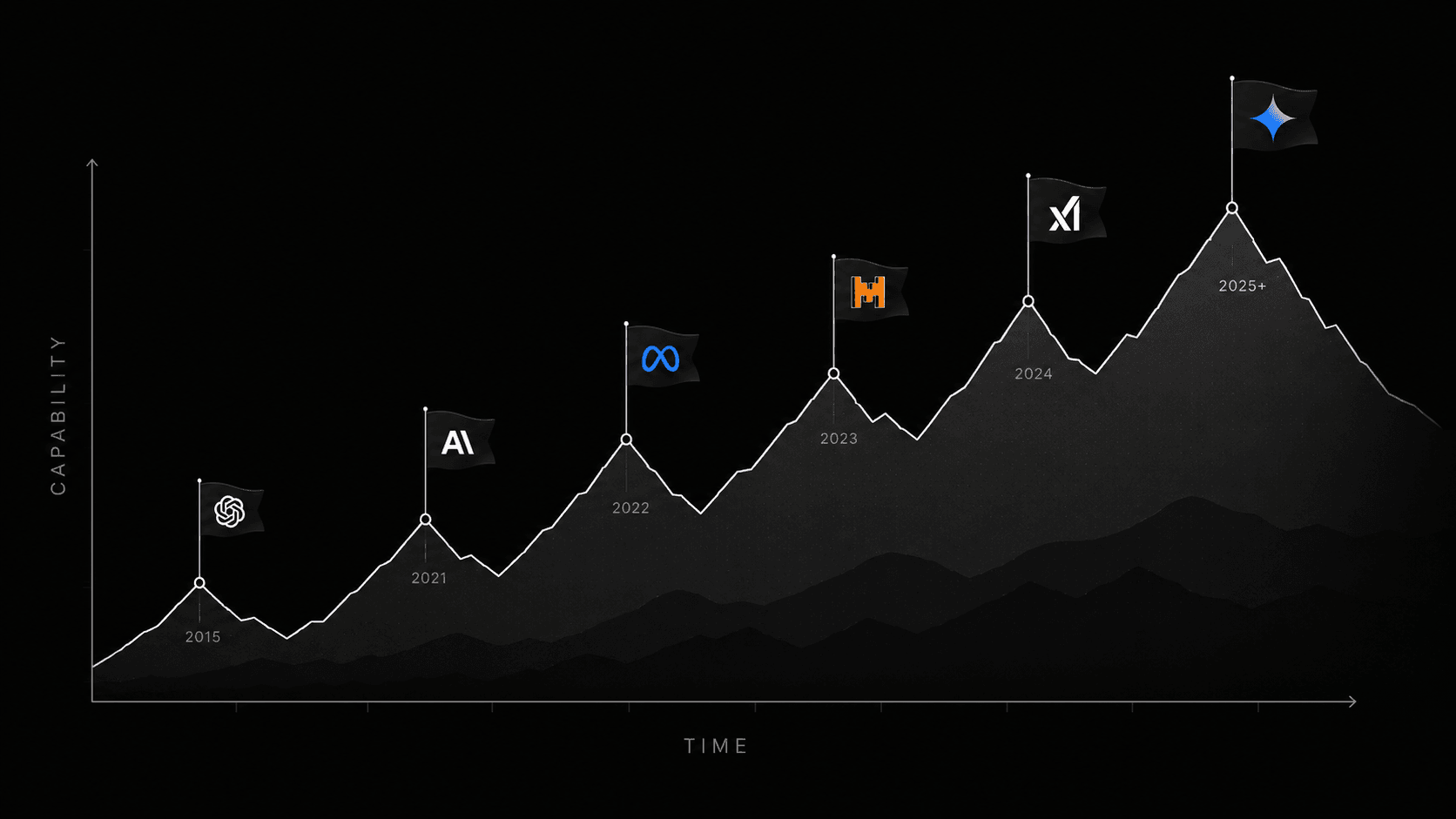
Here's where things stand as of this week.
OpenAI: GPT-5.6 and the Three-Tier Split
OpenAI shipped its newest family, GPT-5.6, in three variants: Sol as the workhorse flagship, Terra as a mid-tier option, and Luna as the budget model. Sam Altman claims Sol is 54% more token-efficient on coding tasks than the previous generation, and independent trackers put Sol's coding-agent benchmark score at 80 on the Artificial Analysis Coding Agent Index, a couple points ahead of Anthropic's Fable model, while using under half the compute to get there. TechCrunch + 2
Worth noting: this release didn't roll out cleanly. Government restrictions forced OpenAI into a limited preview for trusted partners in late June before the full public launch on July 9. That's the second time this year a frontier lab has run into export-control turbulence, and it's a pattern worth watching if you're building anything dependent on a single provider's uptime. Wikipedia
My take: GPT-5.6 Sol is the coding-specific one to watch if you're comparing raw agentic throughput. It's not automatically the right choice for your stack, but it's the current efficiency leader on paper.
Anthropic: Sonnet 5, Opus 4.8, and the Mythos Tier
Anthropic's current lineup runs Claude Sonnet 5, Opus 4.8, and Haiku 4.5 as the mainline models, with a new tier above Opus called Mythos. The two Mythos-class models, Claude Mythos 5 and Claude Fable 5, share the same underlying model, but Fable 5 carries additional safety hardening for biology, cybersecurity, and LLM R&D risk. That's a first: a public split between a "trusted-partner" tier and a "general availability with more guardrails" tier of the same base model.
There's also a rougher edge to this story. Both Mythos-tier models launched June 9 and were suspended three days later to comply with U.S. Department of Commerce export controls, before Anthropic restored access on July 1 once those controls lifted. Same category of disruption OpenAI just hit with GPT-5.6. Export policy is now a live variable in frontier model availability, not a footnote.
My take: if you're already in the Claude ecosystem for coding work, Fable 5 is the one to evaluate first given its benchmark position noted above.
Google DeepMind: Gemini 3.1 Live, 3.5 Pro Still MIA
Google's flagship story right now is a gap between announcement and availability. Gemini 3.1 Pro is the current advanced reasoning model in production, built for complex problems across text, audio, image, video, PDFs, and full code repositories with a 1M token context window. Gemini 3.5 Flash is generally available and Google is pitching it hard on intelligence-per-dollar, with claims of a 42% improvement on long-range multi-turn cyber benchmarks and 68% better token efficiency over the prior Flash generation. Google + 2
But 3.5 Pro, the actual flagship successor, is still vaporware as of this writing. Google DeepMind reportedly scrapped an earlier build after engineers found structural issues, and every specific detail circulating, including a rumored July 17 date and a 2-million-token context window, is unconfirmed third-party reporting, not an official announcement. Sundar Pichai told a frustrated I/O crowd in May to "give us until next month", and that month has now stretched twice. Tech TimesTech Times
My take: Gemini 3.5 Flash is genuinely good for cost-sensitive agentic work. Don't build a roadmap around 3.5 Pro's rumored specs until Google actually ships a model card.
xAI: Grok 4.5 Pivots to Developers
xAI's move this cycle was strategic, not just technical. Grok 4.5 launched July 8, explicitly optimized for coding, agentic tasks, and knowledge work, priced at $2 per million input tokens, and it's the first model built since xAI acquired the Cursor code editor, with real developer session data folded into training. Musk described it as "roughly comparable to Opus 4.7, but much faster," and independent benchmarking backs part of that up: it lands fourth on the Artificial Analysis Intelligence Index, ahead of every open-weight model and all Gemini models, at over 60% lower cost than Opus 4.8 or GPT-5.5, while using roughly a fifth of the output tokens per task that Opus 4.8 needs. Quasa + 3
My take: this is the one to test if your bottleneck is API cost on high-volume agentic coding runs, not raw ceiling capability. It's not the smartest model in the room, it's the cheapest model that's still in the room.
The Open-Weight Tier Isn't a Footnote Anymore
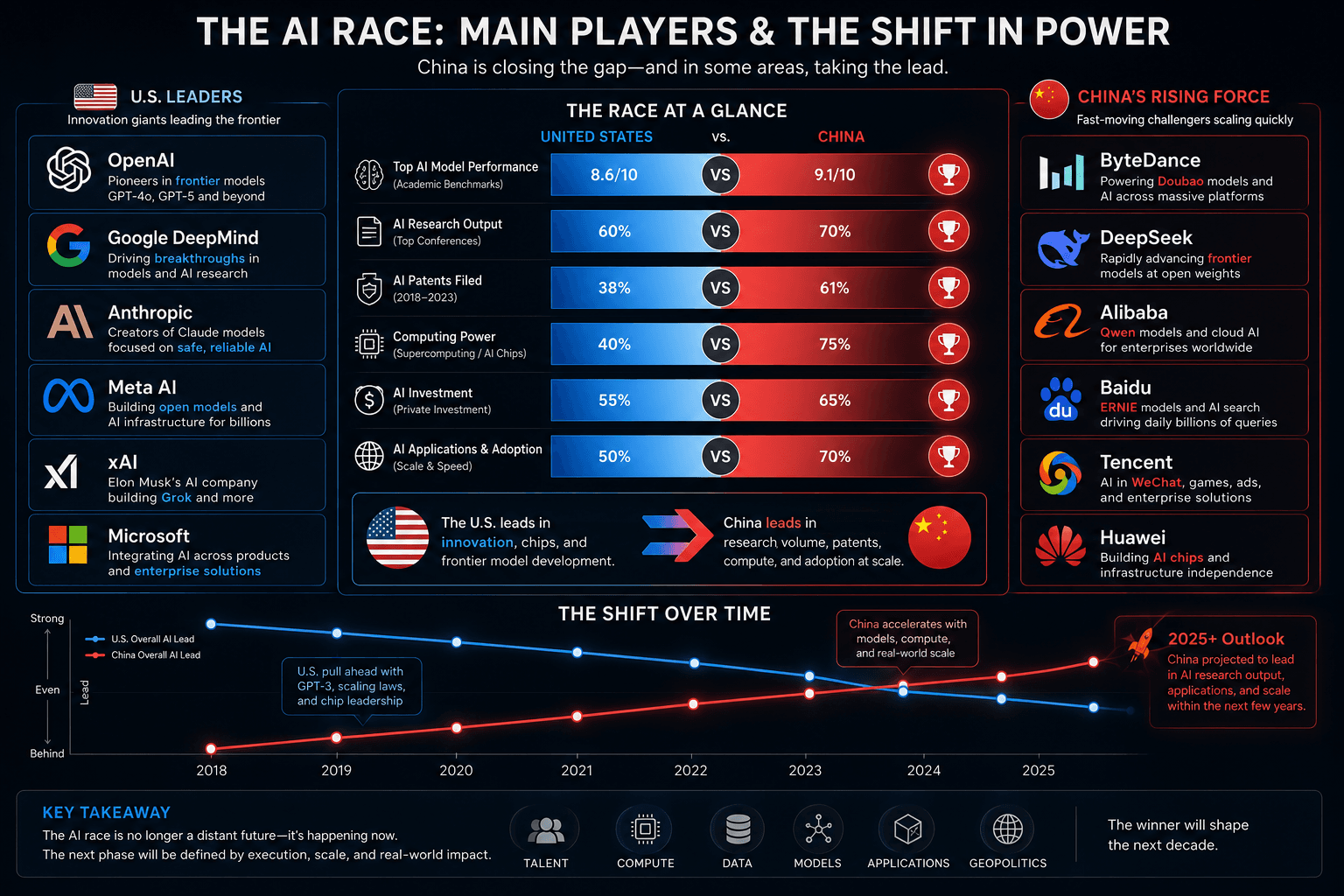
If your mental model of open-source AI is "good enough for hobbyists, not for production," that model is now a year out of date. DeepSeek V4-Pro hits 80.6% on SWE-bench Verified, within 0.2 points of Claude Opus 4.6, and ships under an MIT license. Qwen 3.5 leads open-weight scientific reasoning at 88.4% on GPQA Diamond, and Llama 4 Scout offers a 10-million-token context window, unmatched by anything closed-source. Meta, meanwhile, quietly pivoted its actual flagship effort away from open weights entirely: Meta Superintelligence Labs shipped Muse Spark in April as Meta's first closed-weight, API-only frontier model, while the long-rumored open Llama Behemoth was effectively shelved after the team lost confidence the gains at that scale justified shipping it. Codersera + 4
My take: DeepSeek V4-Pro is the one worth self-hosting if you have the GPU budget and care about data control. It's not a compromise anymore, it's a legitimate frontier-adjacent option at a fraction of the cost.
So What Actually Matters Here?
Strip away the launch-day hype and three things are true right now:
The gap between closed frontier and open-weight has collapsed to fractions of a benchmark point on coding tasks. That changes the calculus for anyone building infrastructure, not just anyone chatting with a bot.
Export control is now a real operational risk, not a hypothetical. Two major labs have had public model access disruptions tied to government policy in the last six weeks alone. If you're architecting anything mission-critical on a single provider, that's a single point of failure worth pricing in.
The "best" model question is now a "best model for this specific job at this specific cost" question. Grok 4.5 for cheap high-volume coding. Gemini 3.5 Flash for cost-efficient agentic work. Fable 5 or GPT-5.6 Sol if you need the ceiling and can pay for it. DeepSeek V4-Pro if you want to own the weights.